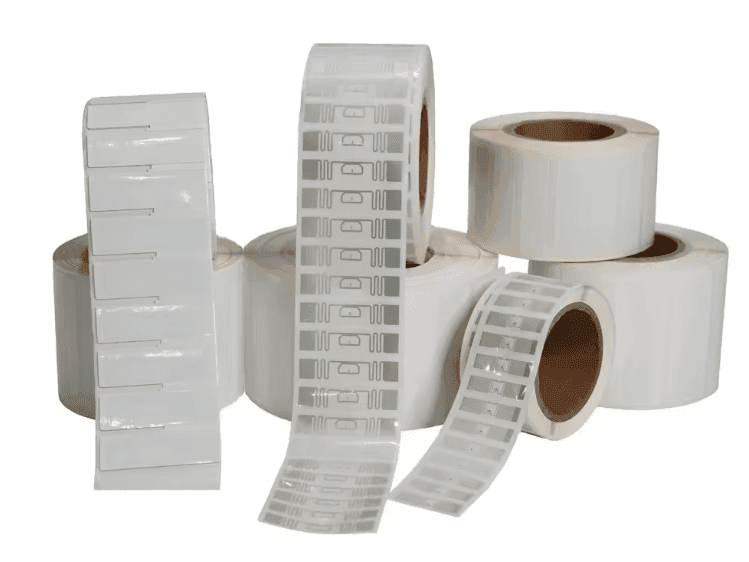
As we all know, electronic tags are mainly divided into high-frequency electronic tags, low-frequency electronic tags, and UHF electronic tags according to the frequency classification. Today, we mainly understand the advantages and applications of UHF RFID electronic tags.
1. the advantages of UHF RFID electronic tags;
Can identify high-speed moving objects, can also read multiple objects at the same time, with the following advantages:
1) Strong penetration, resistance to harsh environment.
2) Strong security and confidentiality.
3) Reusable, data memory capacity is large.
2. UHF RFID electronic tag standard protocol;
At present, the common UHF RFID air port protocols in China include international standards, national standards, industry standards, and enterprise standards.
Il-vantaġġi u l-applikazzjonijiet tat-tikketti elettroniċi UHF RFID
The most popular standards are 6C and 6D standards, namely ISO/IEC 18000-6C(63), ISO/IEC18000-6D(64), in addition to China’s national standard GB/T 29768-2013 officially implemented in May 2014
3. Uhf RFID electronic tag band;
The global coverage of UHF electronic tag bands varies, bħal:
1) China’s frequency band 840~844MHz and 920~924MHz
2) Eu band 865MHz~868MHz
3) Japanese frequency band is between 952MHz and 954MHz.
4) Hong Kong, Thailand, Singapore 920MHz~925MHz
5) The frequency band of the United States, Canada, Puerto Rico, Mexico and South America is 902MHz~928MHz
4. the application of UHF electronic tags;
The UHF RFID market application scenario is quite broad, with the advantages of reading multiple labels at one time, identifying a long distance, transmitting data fast, high reliability and life, and resisting the harsh outdoor environment.
It can be used in asset management, production line management, supply chain management, warehousing, anti-counterfeiting traceability of various items (such as tobacco, alcohol, medicine, etc.), retail, vehicle management and so on.